
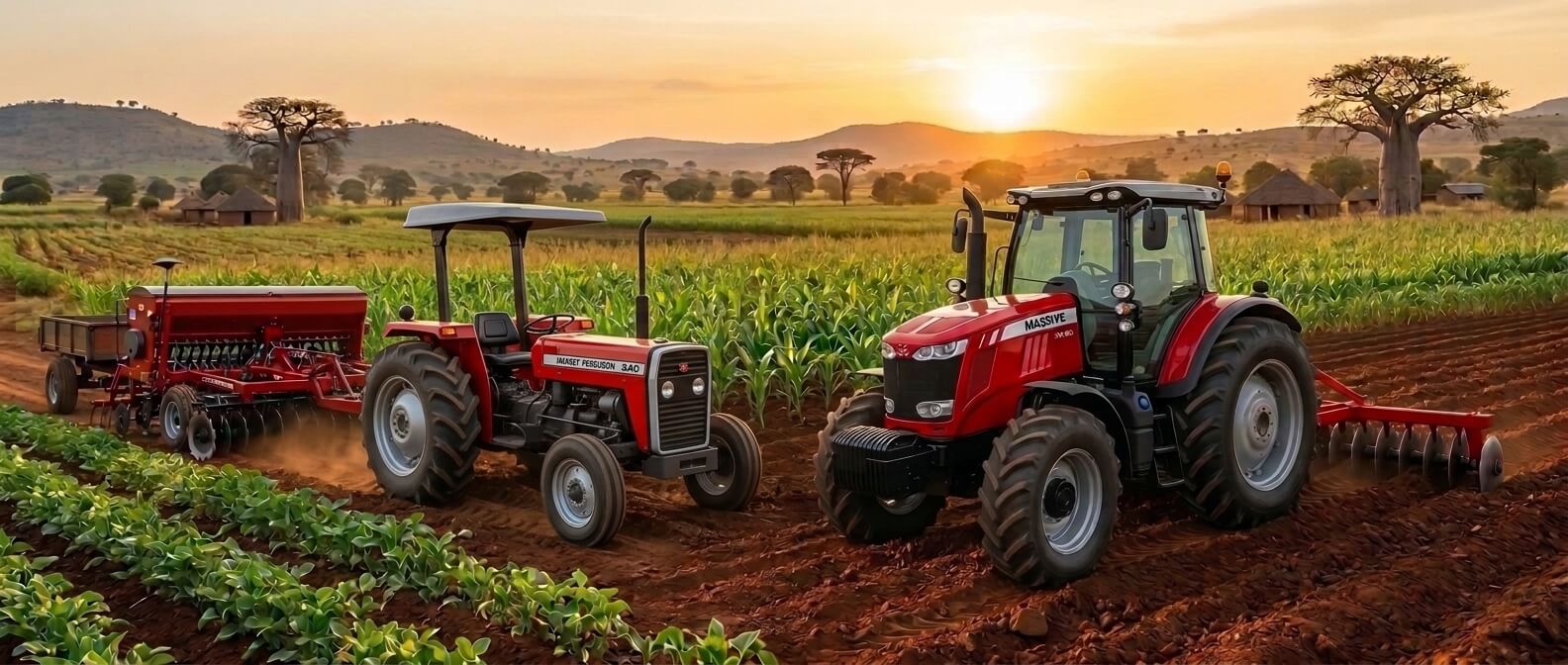
Choosing the right tractor for Ugandan farming conditions means matching horsepower and tyre type to your soil and farm size, prioritising brands with strong local after-sales support, and balancing new versus used options against your budget. Agriculture contributes 24.9% of Uganda’s GDP and employs over 70% of the population, making the right equipment choice critical to a farm’s productivity and long-term profitability.
What size tractor do I need for my farm in Uganda?
Smaller farms of 1–10 acres generally perform well with compact tractors in the 35–50 HP range, while larger commercial operations benefit from 60 HP and above to handle ploughing, harrowing, and heavy implement towing. Consider not just your current acreage but your future expansion plans, since underpowered tractors struggle with Uganda’s dense clay and loam soils during the rainy season. Tractors Uganda stocks a range of sizes suited to both smallholder and commercial farms.
Which tractor brand is best suited to Ugandan conditions?
Massey Ferguson and New Holland are the two most trusted tractor brands among Ugandan farmers, each offering reliable performance tailored to different farming needs. Massey Ferguson tractors are generally favoured for their fuel efficiency and widely available spare parts, while New Holland Tractors are known for robust build quality on heavier terrain. For a detailed side-by-side breakdown, see Massey Ferguson vs New Holland: Comparing Popular Tractor Models in Uganda.
Should I buy a new or used tractor in Uganda?
New tractors offer full warranties, the latest technology, and lower maintenance risk, while used tractors provide a significantly lower upfront cost for budget-conscious farmers. The right choice depends on your available capital, farm size, and how intensively the tractor will be used; for a fuller comparison, read New vs Used Tractors in Uganda: Which Is the Smarter Buy? New buyers who prioritise reliability and long-term cost predictability tend to do better with new models, while those needing immediate cost savings may find used tractors workable if bought from a reputable dealer.
What else should I check before buying a tractor?
Beyond brand and size, verify ISO certification, implement compatibility, and the availability of local spare parts and servicing. Tractors Uganda certifies every tractor to International Organization for Standardization (ISO) standards and favours simple, dependable machines without unnecessary electrical components that are prone to failure in rural conditions. For a complete walkthrough of the buying process, see The Complete Guide to Buying Tractors for Sale in Uganda.
How much does a tractor cost in Uganda?
Tractor prices in Uganda vary based on brand, horsepower, and whether the machine is new or used, with additional costs for implements and attachments. For current pricing guidance, see Tractor Prices in Uganda or contact Tractors Uganda directly for a tailored quote.
Frequently Asked Questions
What implements do I need alongside a tractor for Ugandan farming?
Most Ugandan farms need a plough, harrow, and trailer as a starting set, with planters or sprayers added depending on the crop. Tractors Uganda’s Farm Implements range covers these essentials and more.
How do I maintain a tractor during Uganda’s rainy season?
Regularly check tyre tread and pressure for muddy fields, clean air filters more frequently due to dust and moisture cycles, and service hydraulics before peak planting periods to avoid breakdowns.
Does Tractors Uganda offer after-sales support and technical guidance?
Yes, Tractors Uganda provides technical and mechanical guidance to help farmers select and maintain the right tractor or equipment, backed by attentive service tailored to individual farm needs. Reach the team via Tractors Uganda’s contact page.
Tags: agriculture, farming, kubota, machinery, masseyferguson, newholland, tractors, uganda